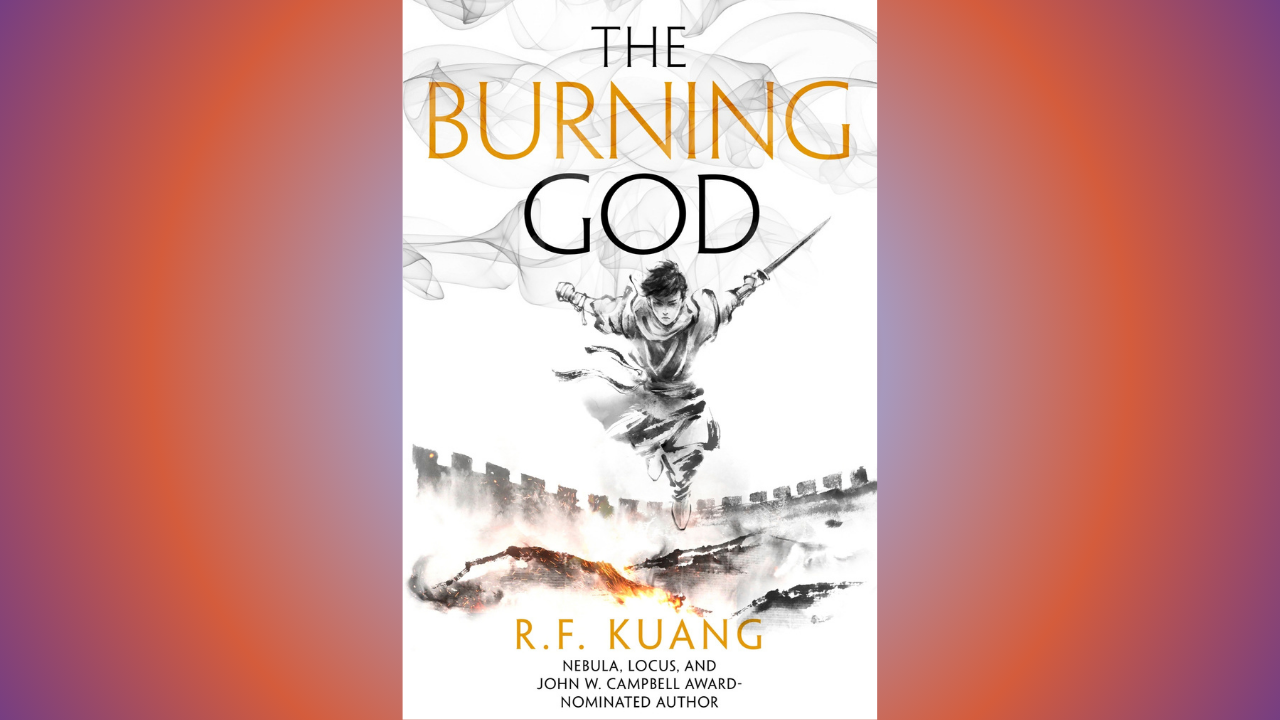
The Burning God Review: A dashed hope finale

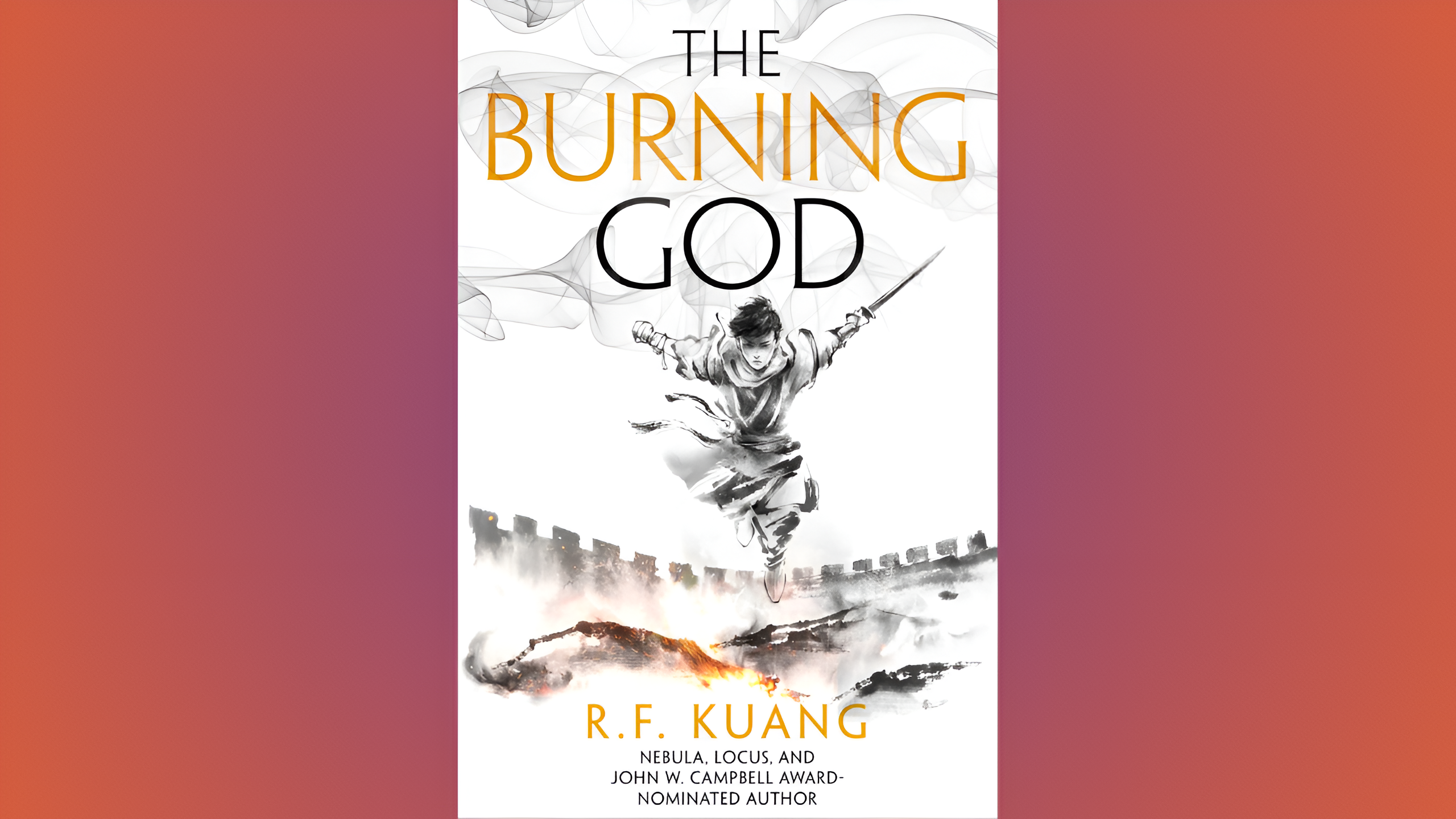
R.F. Kuang has inspired me for a plethora of reasons and is one of my favorite authors! I love her novels, writing style, genre-bending, and high- and low-concept tendencies. However, while The Poppy War was one of my favorite books of all time, The Dragon Republic was just a great grimdark fantasy epic. Obviously, that's great news for a sequel, but it was a noticeable drop-off from the first. So, did it drop to just a good book, or did it bridge the quality gap between the previous two? That's what I, Brighton Nelson, will be discussing in today's review. Thanks for joining me, and I hope you enjoy your time on the site!
The Positives
Let's start with the positives. First, Rin is far less reactive in this book than in the last, and far more competent and experienced than in the first book. In some regards, this is Rin at her best.
Sure, she isn't getting a huge arc, but her darkness, power, and morally gray nature are awesome here. Her internal journey was still the best in the first book, but here she's at her most destructive and self-destructive. Her extensive time in the book's main leadership role changes the dynamic significantly—not a mere soldier and shaman-in-training like the first, nor a discardable, weaponized pawn in the second.
The moments where she gets to show the good, the bad, and the ugly as a leader are some of the most interesting in the novel. It's good to see her be driven by only her and Kitay's decisions for most of the novel.
The book also does a good job setting itself apart, action-wise. Where the first book focuses on primitive warfare with only occasional shamanism, and the second deals heavily with political warfare and diplomatic relations, this novel pivots to grassroots guerrilla warfare, massive multi-shaman battles, and airships. The trilogy does a fantastic job distinguishing each book's action identity, so the conflict never feels stale.
The relationship between Rin and Kitay is easily at its pinnacle here, especially given the bond they formed in the previous book. It always adds tension to know a fatal wound is transferable, and while the book could've perhaps played around more with this bonded state, it was still a nice touch.
This book also explored the logistics of war more holistically than before. Considering Rin is the leader, she has to think about it more often. While it's not as strong as the Southern refugee scenes in the previous book, this book looks into economic realities and small-scale horrifying circumstances more often.
The very last moments perfectly captured what came before and landed the tone of the whole series thus far. While I have plenty of gripes with the events leading to the end, it logically was the most realistic ending for all parties involved. It forms a sort of narrative chiasmus with the rest of the series so far.
I liked the continued deconstruction of how useful godly power actually is for sustained peace, and how diplomacy ends up being the most useful tool—shamanism solely leads to a cycle of never-ending wartime.
My favorite new addition has got to be Rin training new shamans, as she suggested she wanted to do in the previous novel. While it's very underutilized, it's an awesome little bit, and getting to see four shamans team up was so satisfying. Her lessons and battles with them—while so brief—might have been my favorite part of the novel.
The Negatives
Nonetheless, this book has far more negatives than the previous two. And, by extension, this continued the trend and was, unfortunately, a disappointing conclusion to this terrific trilogy.
The first heart-wrenching fail here was everything to do with the Trifecta. I didn't even want to finish the book for a solid moment because I was so overwhelmingly underwhelmed. The Dragon Emperor has been teased extensively as an incredibly powerful force to be reckoned with. He's been ensconced for generations, holding so much power that he's a legendary leader that everybody has talked about. Daji and Jiang are so scared of his power that they always dance around their words when he's around.
Daji, the Empress and Vipress, who went from ruler to peasant, teams up with Rin—a very interesting alliance that gets very little page time. She's been a pivotal character all this time, and I couldn't wait to see her try to fight with the Emperor. And Jiang, my favorite character in the first book, has slowly been recalling who he truly is and unraveling from the whimsical master from The Poppy War. So, what happens when these three reunite? Rin kills them almost immediately. We don't even get a chance to see their powers! I understand the thematic implications—that she's starting to realize shamans must die for normal society to exist—and I understand that the Dragon Emperor opposed Rin's proposal. Still, it felt like everything intriguing about their characters got pushed aside.
Similarly, remember all the setup of Vaisra and the Hesperians being the main driving force of the last book? Vaisra dies so soon here that it's pathetic. While I understand Nezha needed to take over, it felt like the entirety of book two wasn't even necessary, especially since Nezha feels sidelined for most of this book anyway. The Hesperians were also so uninteresting as villains this time around—I kept forgetting they were even relevant. This series sets up so many questions, and this book resolves them all so swiftly and anti-glamorously that I actually felt a coldness in my soul, because I had so much confidence that Kuang would resolve these loose ends with her usual luster.
Oh, don't you worry, because that's not it. The shamans that replace the Trifecta itself? They die so soon after being introduced that it's disappointing again... There comes a point where killing everyone off for "random realism" starts to make the book feel cheap. With all these characters, I'm not saying they shouldn't have died, but they needed to be around long enough not only to adequately replace the Trifecta, but to become top-tier characters. Instead, it feels like Kuang threw great ideas at the wall, didn't check if they would actually stick, and forgot she needed to stick the landing.
Outside of all the disappointments relating to the characters, I think the ending was too abrupt. Rin deserved a little more time to establish a new status quo, so breaking it would be more powerful. The Hesperians were also far less nuanced than they were in the previous novel. Not that I didn't want Rin to antagonize them, but I was happy Kuang tried harder in the last book than with the Muganese. Here, they feel more one-note.
Also, the Phoenix's rules and power were at their most inconsistent here. The novel constantly displays the Phoenix's need for control. Yet, at multiple pivotal moments, it disappears on a whim to give her agency (like at the end with Kitay) or leaves just long enough to justify a standard melee (because, well, that's cool to read). And the ending, while thematically the right move, felt contrived and bogged down by plot conveniences. The final moments also didn't fully pivot into the anti-chosen-one deconstruction in every way, as the final phrases suggest she and her choice were the only thing able to win the war.
The Brighton's Bookshelf Verdict
Brighton's Bookshelf Score - 6/10
Letter Score - C+
The Burning God isn't a horrible book, but it's a regrettably weak trilogy closer. This book is a textbook definition of missed potential. It has all the pieces to be the best book in the trilogy and a powerful closer. Yet it keeps rushing through almost all its plot points until it feels like a far cry from the previous novel, which didn't even progress the plot that much, and it's in a different galaxy than the incredible first book. Nonetheless, R.F. Kuang is still one of my favorite authors, and I was glad to spend another 640 pages reading her writing.
Interested in checking out some of my other fantasy and R.F. Kuang novel reviews? Check them out below!
 Author Bio
 Author Bio
 Author BioAuthor Bio
 Author BioAuthor BioAuthor Bio
Enjoy this review? Stay tuned for more articles from Brighton's Bookshelf! Enjoy video games, films, or music? Check out our sister sites, RPG Ranked & The Reel Ranker & Mr. Maestro, respectively!